



Alpine Capital Investor Newsletter - Q3 2026
Share article


1. Market Overview and Performance
Global equities finished the third quarter of 2026 modestly higher, although the headline returns told only part of the story. The MSCI World Index returned 1.97% in US dollars, and the S&P 500 gained 2.30%. Elsewhere, emerging markets, Europe and Japan declined in dollar terms, and US smaller companies had a particularly difficult quarter, with the Russell 2000 falling 7.19%.
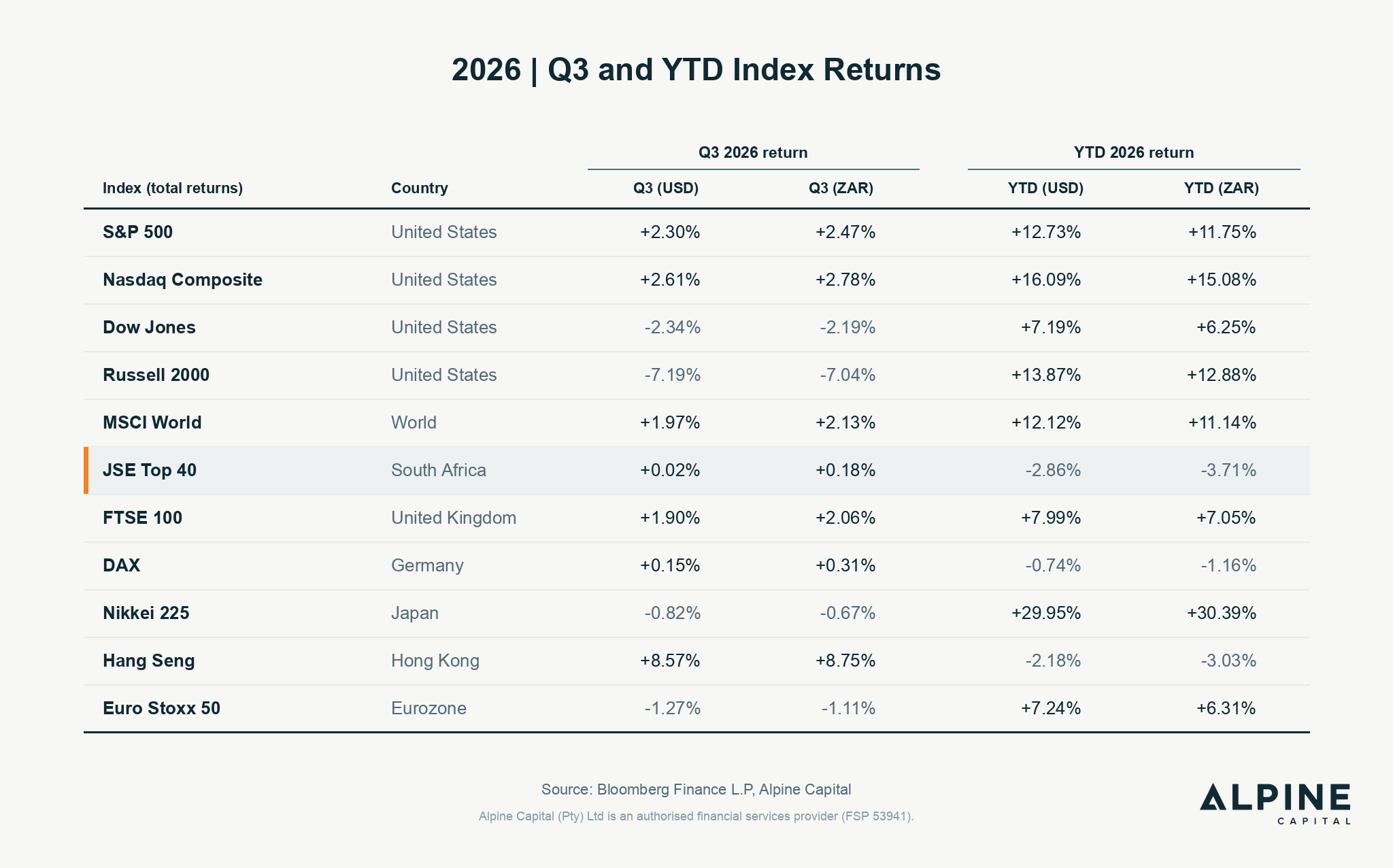
For us, the more revealing observation was the gap between the S&P 500's headline return and the returns of the companies within it. While the index gained 2.30%, its equal-weighted equivalent, which gives each company the same influence, declined 2.11%. The median company lost 4.70%, and only 37.2% of constituents finished higher. Most shares therefore fell, despite the positive headline return.
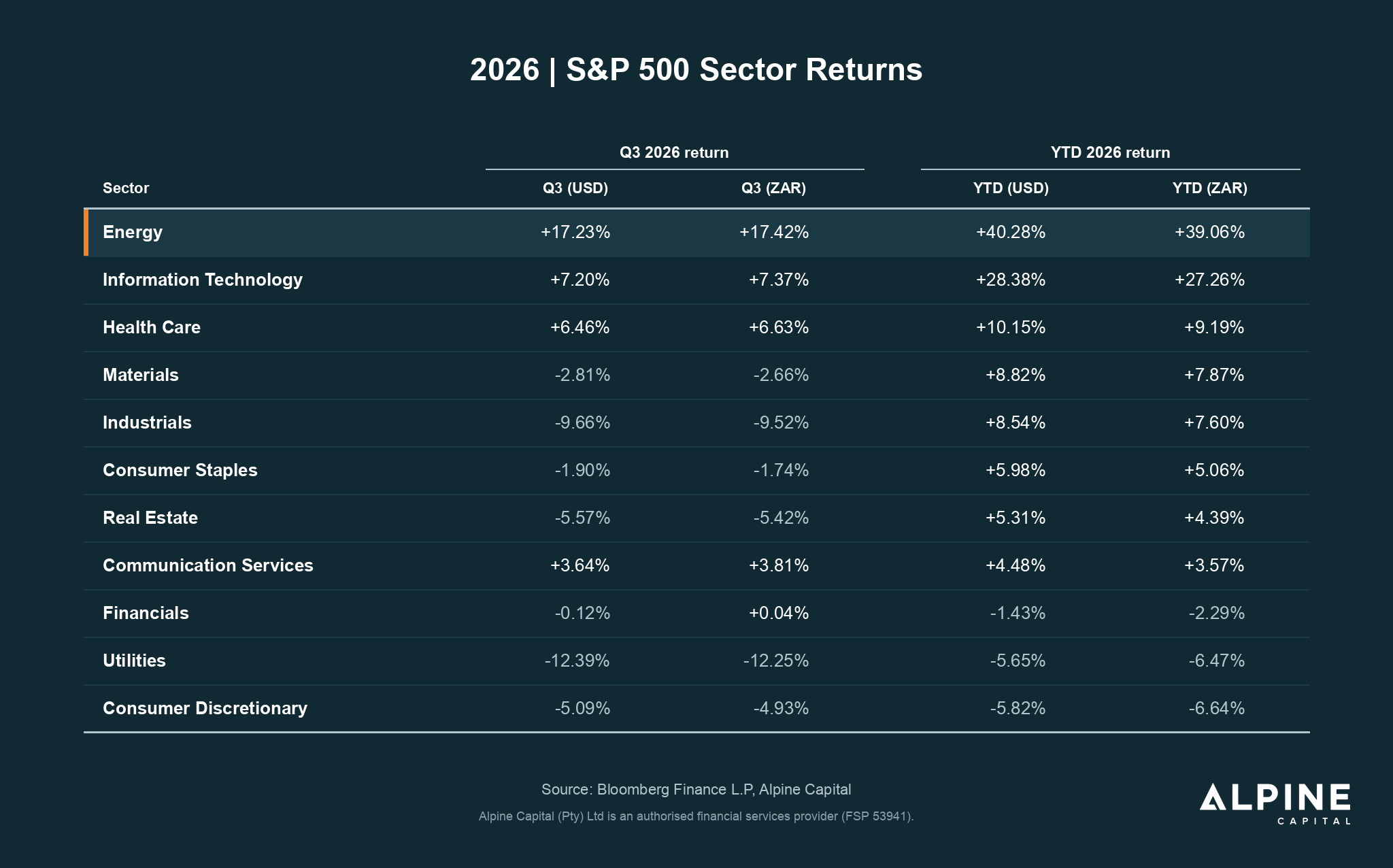
Energy and Information Technology were the clear sector leaders, gaining 17.23% and 7.20% respectively, while seven of the eleven sectors declined. The positive index return therefore needs to be read with some caution: it was not representative of most companies’ experience during the quarter.
2. Building the Future: Who Pays for AI?
The long-term opportunity presented by artificial intelligence—or, as Trump has rebranded it, “superintelligence”—remains significant. What is less certain is the path to realising it, who can fund it, and what shareholders will ultimately receive in return, and when.
Datacentres, chips, networking equipment and power infrastructure require substantial spending today, while the benefits may take years to emerge. We favour businesses that, where possible, can fund this expansion from the cash they already generate: they can absorb delays and adjust their plans without depending on the next capital raise. That flexibility matters more to us than size alone.
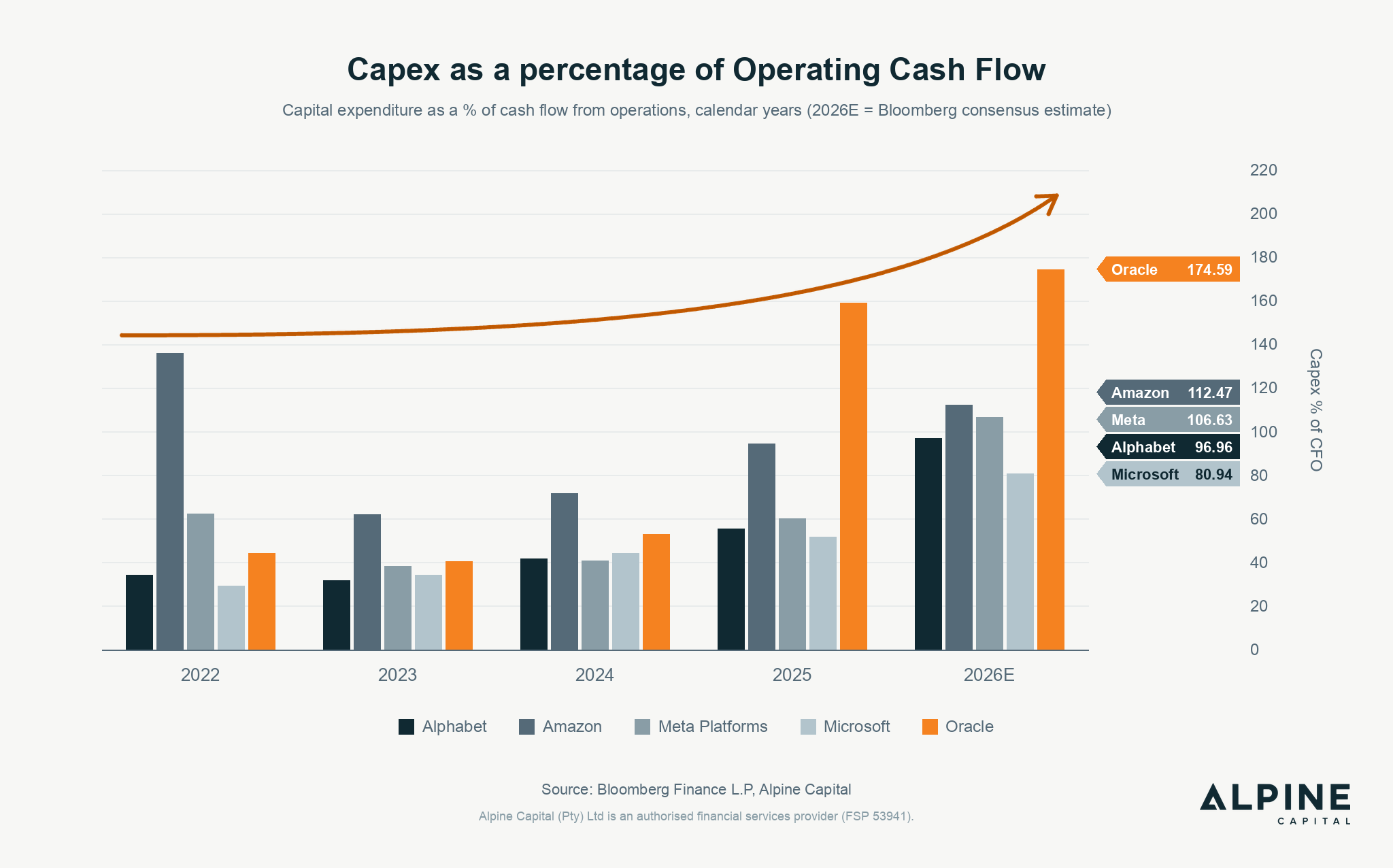
Borrowing and issuing shares are not inherently problematic, but interest must be paid and new shares dilute existing owners unless the investment creates enough value to compensate them. Even companies funding their spending from their own cash are not immune to scrutiny: when that spending consumes the cash flow, investors question the return. The market’s response this quarter highlighted that tension. Alphabet’s cloud business grew by 82%, but its free cash flow turned negative for the first time since its 2004 listing, and its shares suffered their worst day in more than a year. Apple, having largely avoided the AI spending race, rose 15% in July alone. Investors favoured near-term cash generation over ambitious capital expenditure, although whether Apple’s restraint proves prudent or leaves it underinvested remains an open question. The real test is whether this spending delivers genuine economic benefit and rewards shareholders for the risk.

A large budget is only an advantage if it is spent well. In recent months, we have been reviewing and refining our investment philosophy, placing greater emphasis on the qualities behind the numbers: how management spends shareholders’ money, why customers stay, and whether the business can adapt when its assumptions prove wrong. Financial results and the price we pay remain essential, but we believe these less easily measured qualities will account for a substantial part of long-term returns.
AI spending also has wider economic consequences. Resilient demand, persistent inflation and continued spending on equipment, electricity and infrastructure could keep interest rates elevated. In September, the Federal Reserve chair cited “competition for capital” from AI investment as one reason long-term rates were rising.
When the world’s largest companies spend at this scale, the portion they fund through borrowing competes for the same pool of savings as governments, homebuyers and smaller businesses. As spending outgrows internally generated cash, that borrowing is likely to increase.
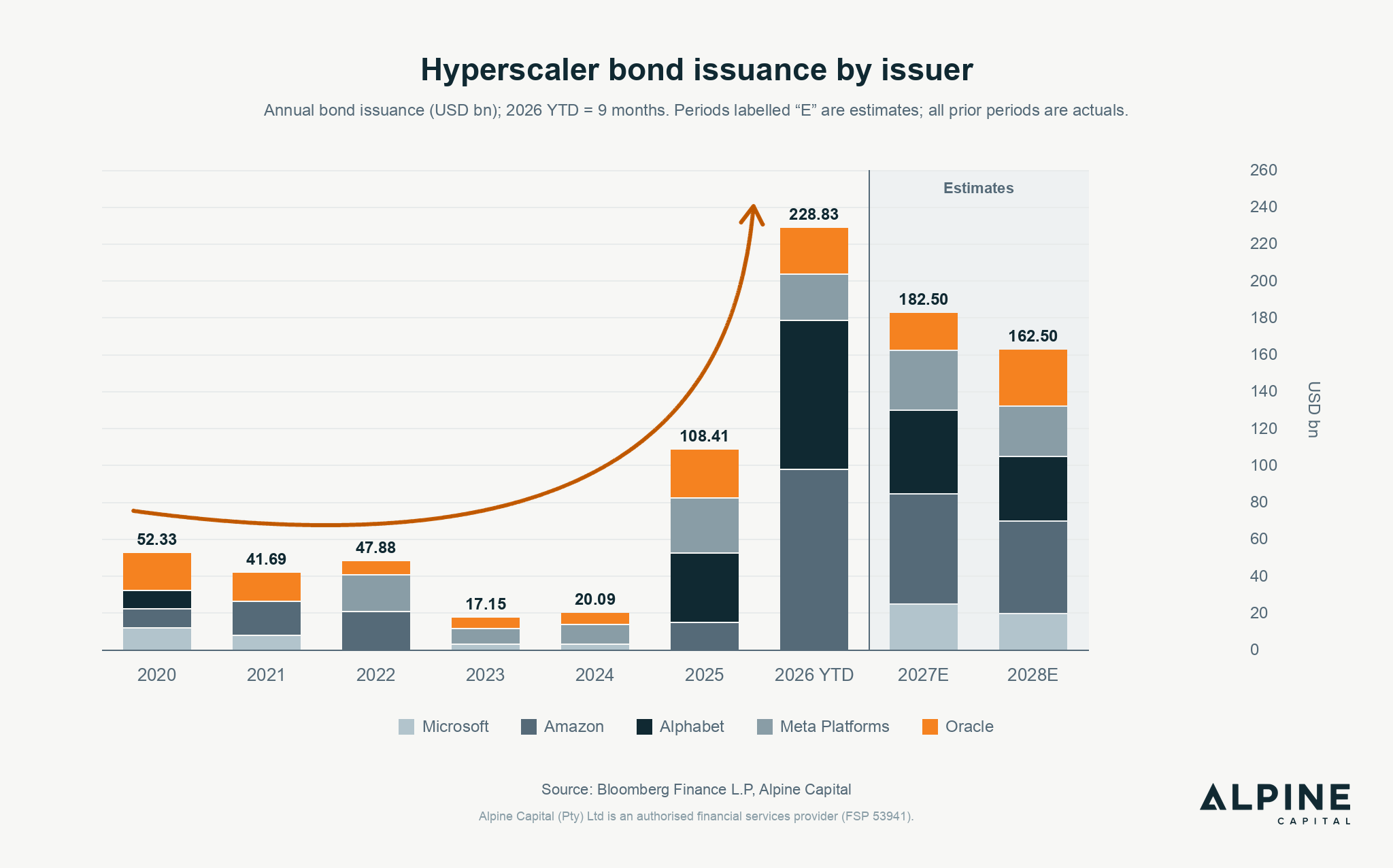
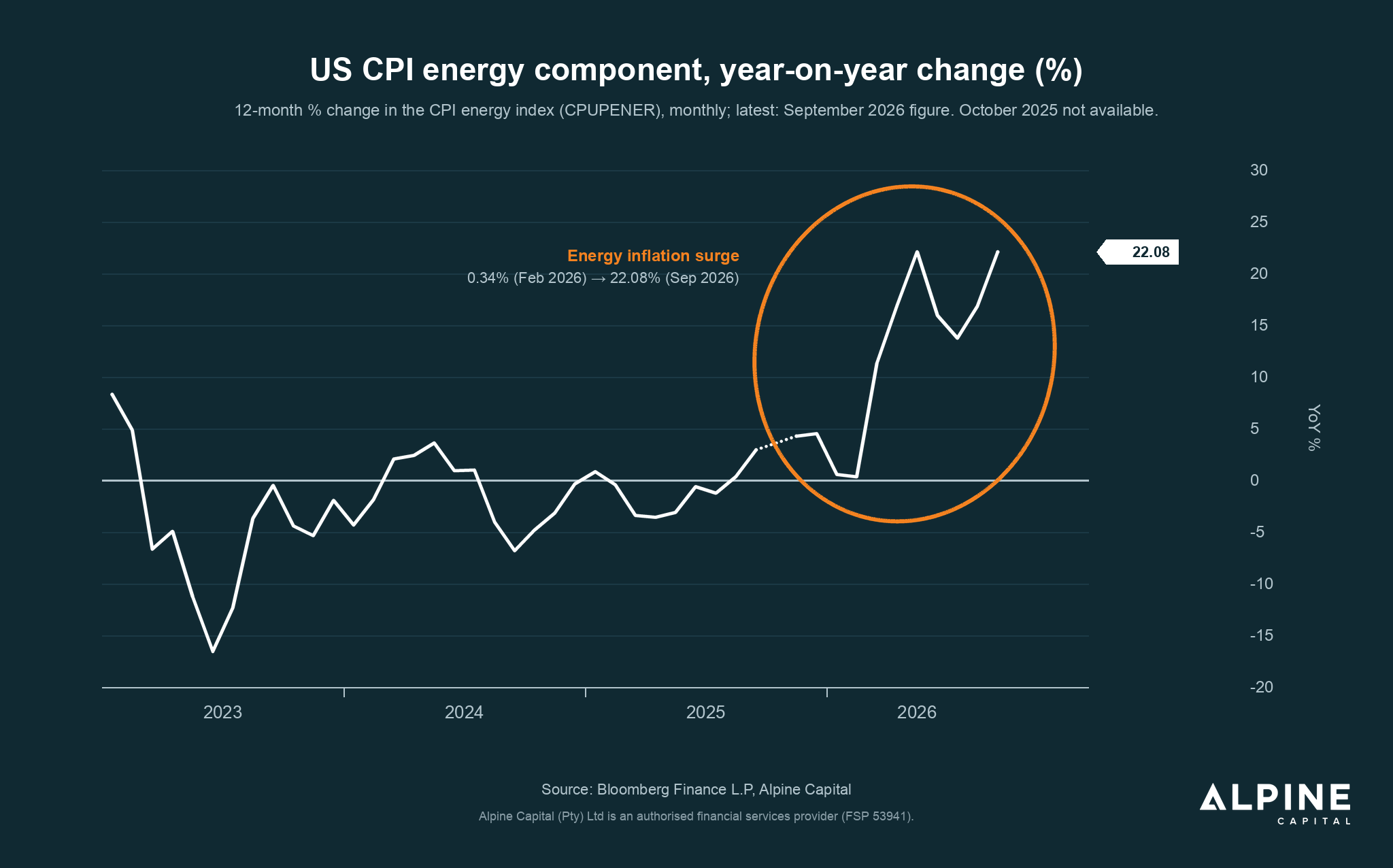
Over the longer term, AI-driven productivity gains should place downward pressure on inflation, as earlier technological advances have done. In the short to medium term, however, the scale of the build-out may have the opposite effect, and the path to prosperity will not be a straight line. That said, AI spending is a slow-building pressure on long-term borrowing costs and most probably not the main driver of today’s inflation. The ongoing Iran conflict and the resulting oil shock represent the biggest challenge facing the Federal Reserve and are the main source of the current inflationary pressure. Because this source of inflation is political rather than the product of normal market forces, it is the hardest part of the inflation outlook to predict, and a resolution does not appear likely in the immediate term.
The charts below separate the two forces at work. Headline CPI, which includes energy, has moved closely with the sharp rise in the energy component, while core CPI and core PCE, which strip energy out, have been comparatively stable. It would be a mistake, however, to read that stability as reassurance. Core measures capture the energy shock only indirectly and with a delay, as higher fuel and power costs are passed on through freight, production and services prices. The longer oil remains elevated, the more likely it is that core inflation rises too. Core inflation is what ultimately anchors the Federal Reserve’s interest rate decisions and, therefore, equity valuations, as we discuss in the next section.

3. Rates, Valuations and the Return of Bonds
Why do interest rates and inflation matter so much to equity investors? Because they help set the price of equities. A share is worth the cash a business is expected to generate in the future, converted into today’s money using a discount rate that is anchored to interest rates. When rates rise, those future earnings are worth less today, so share prices come under pressure; when rates fall, that pressure eases. Inflation largely determines where rates go, so it feeds directly through to equity returns.
Higher rates also affect equities in a second, more visible way: they make bonds a real alternative. A share’s earnings yield (a company’s annual profit divided by its share price) tells you roughly what the business earns for every $100 you pay for it. At the end of September, the S&P 500 was priced at about 19 times expected earnings, an earnings yield of roughly 5.3%. The US 10-year government bond offered almost the same, at 5.29%. For the first time in about two decades, bonds are competing with equities again.
We do not see this as a reason to abandon equities, but it does raise the bar. A bond’s interest payment is fixed for its entire life. A good business can grow its earnings, and that growth is now the main thing equity owners are being paid for. This year, earnings rather than rising valuations have carried the market. Analysts forecast S&P 500 earnings growth of around 30% for 2026, although some of that comes from one-off investment gains at a few large technology companies, and growth of between 13% and 15% for 2027. Meanwhile, the price the market is willing to pay for those profits has fallen from about 23 to 19 times earnings.
Where rates go from here is far from certain, and a credible case can be made in either direction. Rates could rise if the oil shock feeds through to core inflation or fall if inflation eases or growth weakens. The distinction matters: lower rates because inflation is settling would be welcome; lower rates because earnings are deteriorating would be far less reassuring. In short, interest rates matter a great deal, but we cannot predict them reliably, and neither can anyone else.
Growth therefore remains the key variable. Many businesses can manage higher borrowing costs while sales and profits continue to expand. The more difficult combination would be weakening demand alongside expensive financing. A sharp slowdown is not our central expectation, but it remains a risk we continue to test our portfolios against.
4. Portfolio Positioning and Market Commentary
During the quarter, we made no major portfolio changes, only measured adjustments. In our ETF portfolios, which were substantially overweight technology, we reduced broad-based technology exposure towards a more neutral weighting, and in certain model portfolios we continued to reduce semiconductor exposure. As discussed in our previous newsletter, we believe the industry may need time to consolidate after a strong cycle, with near-term earnings potentially close to a peak. We do, however, believe the industry will continue to benefit from structural tailwinds for the foreseeable future, and we are already monitoring opportunities to re-enter certain positions after substantial drawdowns.
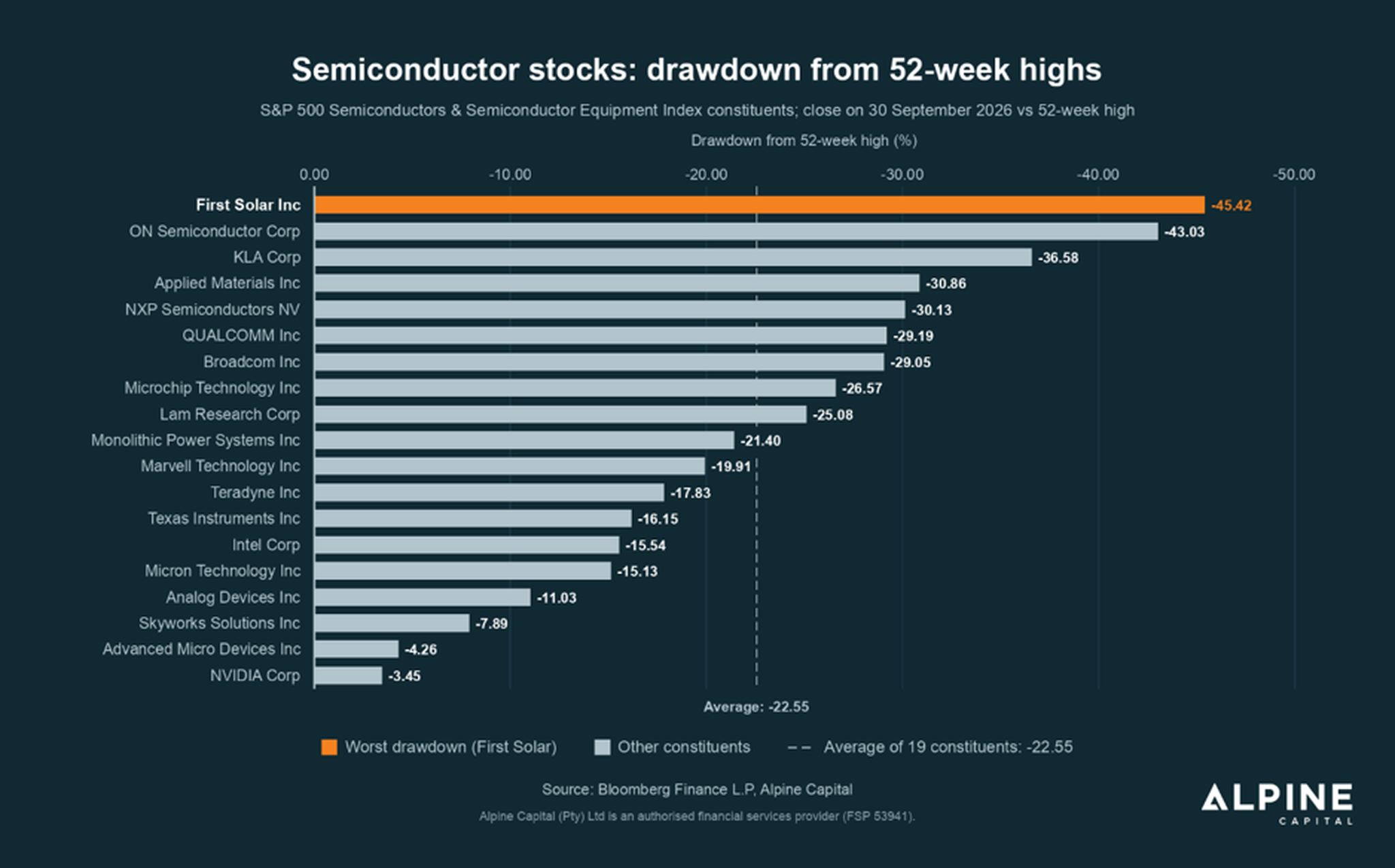
Demand is immense, as almost every technological advance requires semiconductors, but innovation steadily lowers chip prices and strong margins attract new competitors. We believe demand will be strong enough to absorb these pressures, allowing the industry’s leading businesses to continue to thrive.
Unlike our semiconductor holdings, our energy exposure—generally at least in line with, and in some model portfolios above, the S&P 500 weighting—continued to contribute positively. We also remain constructive on copper over the next five years and beyond, given the scale of infrastructure required to support electrification and AI. We intend to add selectively, while keeping commodity exposure focused rather than broad.
We would also like to highlight our Offshore Dividend Portfolio, which is built for times like these. It holds established companies with long records of paying and growing their dividends, mostly in sectors such as consumer staples, energy, utilities and infrastructure. When interest rates stay high, investors tend to value reliable cash today, and these businesses provide it. As noted earlier, bonds also currently offer attractive income, but their payments are fixed.
A good company, by contrast, can raise its dividend year after year and grow in value over time, which makes the portfolio well suited to today’s environment.
A word on the US dollar. People like to think about investments in absolute terms, but in reality, every return is relative—there is always another asset that did better or worse, and every investment decision is ultimately a comparison. The case for a weaker dollar is easy to make. There is no shortage of negativity, and plenty of policies that people disagree with. But the DXY, which measures the dollar against a basket of major currencies, tells the relative story: for all the criticism and all the voices calling the end of the dollar, it continues to stand firm. Put bluntly, the alternatives look worse. Our view is simple: the country with the strongest military, the strongest economy, and the strongest rule of law and governance is likely to remain the issuer of the world’s reserve currency, and the US has the added advantage of two vast oceans protecting it on either side. Until a credible challenger emerges on all of these fronts, we expect the dollar to retain its position.

5. South Africa
South Africans will head to the polls on 4 November for the country’s municipal elections—the level of government closest to the problems residents face every day.
It has been another quarter of very little meaningful economic change. If anything, the municipal decline has spread from Johannesburg to the capital, Pretoria, with water and electricity failures now front and centre—something we experience first-hand every day. These problems are compounding; those are simply the facts. It has never been more important for everyone to go out and vote, and to make sure that their vote counts.
As we have written before, there remain pockets of hope. But until large-scale policy reform takes hold, we do not expect a meaningful revival in South African growth any time soon. In the meantime, South African shares are likely to remain cheap on valuation grounds—a classic “value trap”: cheap valuations, but no growth.

6. Outlook: Optimistic About the Destination, Selective About the Journey
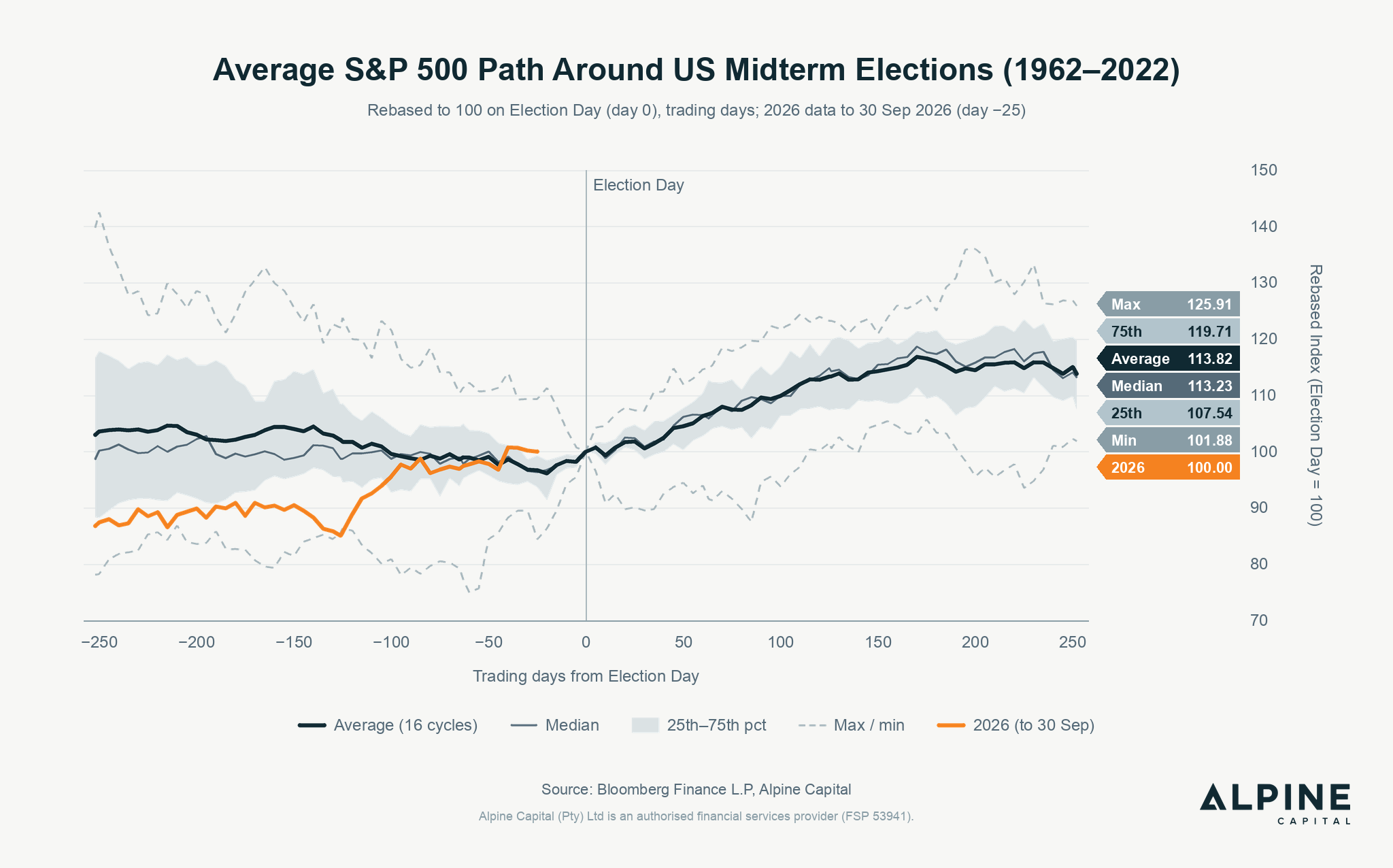
We are more cautious about the short term than we have been for some time. That does not change our constructive view on the long term, but we do expect markets to be uneven in the months ahead, not least because of the US midterm elections on 3 November.
History does, however, offer some grounds for optimism. Across the 16 midterm cycles since 1962, the S&P 500 was higher 12 months after election day in every instance. That pattern supports a positive longer-term view, but it does not rule out volatility or weaker returns along the way.
An uneven or sideways market at index level can still create meaningful opportunities at company level, and that is where we focus. We do not need every sector to rise or interest rates to fall quickly. We need businesses whose progress supports the investment case, bought at prices that leave room for an acceptable return.
We look forward to the midterms passing and the renewed clarity that should follow. Markets do not like uncertainty, and in all honesty: this has been one of the more difficult markets to read in recent years. That is precisely why we have made measured adjustments rather than wholesale changes. We would rather remain patient than react to short-term noise.

